




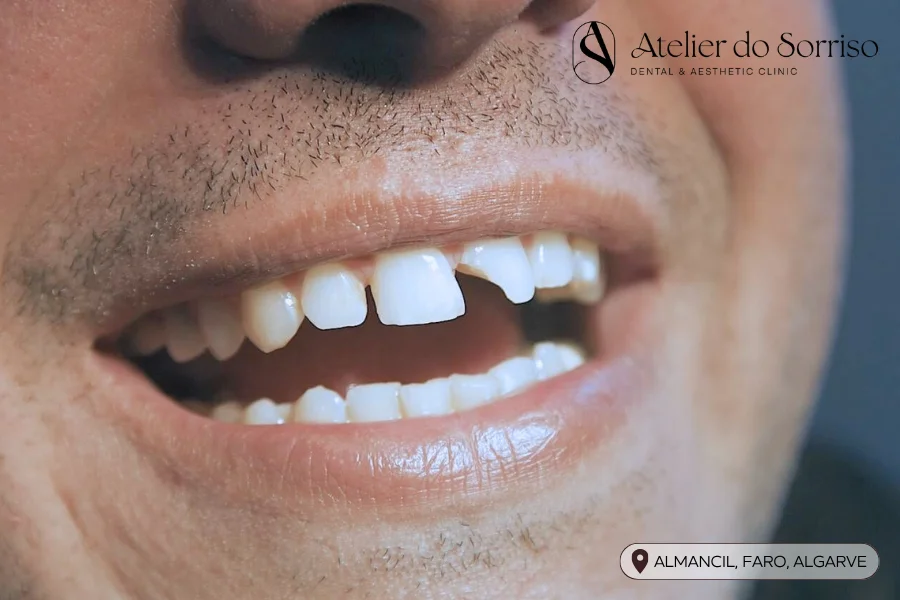
A broken tooth can happen unexpectedly — during a meal, a fall, or even while playing sports. In these situations, many patients’ first reaction is to look for ways to glue the broken tooth at home, whether with regular glue or other improvised methods.
While this is a legitimate concern, trying home remedies can actually make the problem worse. What really matters is knowing what to do immediately and what the safest, most effective professional options are for repairing a broken tooth.
In this article, we’ll explain whether it’s really possible to glue a tooth, which treatments are recommended, how long they last, and how to choose the best solution for each case. We’ll also show why a professional assessment is essential to ensure aesthetics, function, and durability for your smile.
If you’re in the Algarve and need to repair a chipped or broken tooth, at Atelier do Sorriso in Almancil, Faro, you’ll find a team specialized in dental aesthetics and oral rehabilitation, ready to restore your smile safely and naturally.
What to Do Immediately After Breaking a Tooth
Breaking a tooth can be alarming, but the first steps you take make all the difference in improving the chances of repair. Follow these recommended steps before you get to the dentist:
How to Store the Tooth Fragment
If part of the tooth came loose, you should save the fragment. Ideally, place it in saline solution, milk, or even your own saliva, inside a clean container. This helps preserve the tissue until it can be professionally assessed.
Rinsing and Protecting the Area
Rinse your mouth with warm water or saline solution to clean the area. If there’s bleeding, apply gentle pressure with clean gauze. Avoid chewing on that side to prevent worsening the fracture.
When to Seek Urgent Help
A broken tooth doesn’t always hurt right away, but it’s essential to see a dentist as soon as possible. Exposed dentin or pulp increases the risk of decay and infection. The sooner you’re seen, the greater the chance of successfully gluing the broken tooth or restoring it using conservative techniques.
In the case of a fully avulsed tooth (one that has come out completely), timing is even more critical: it should ideally be re-implanted within 60 minutes of the accident.
Is It Possible to Glue a Broken Tooth at Home?
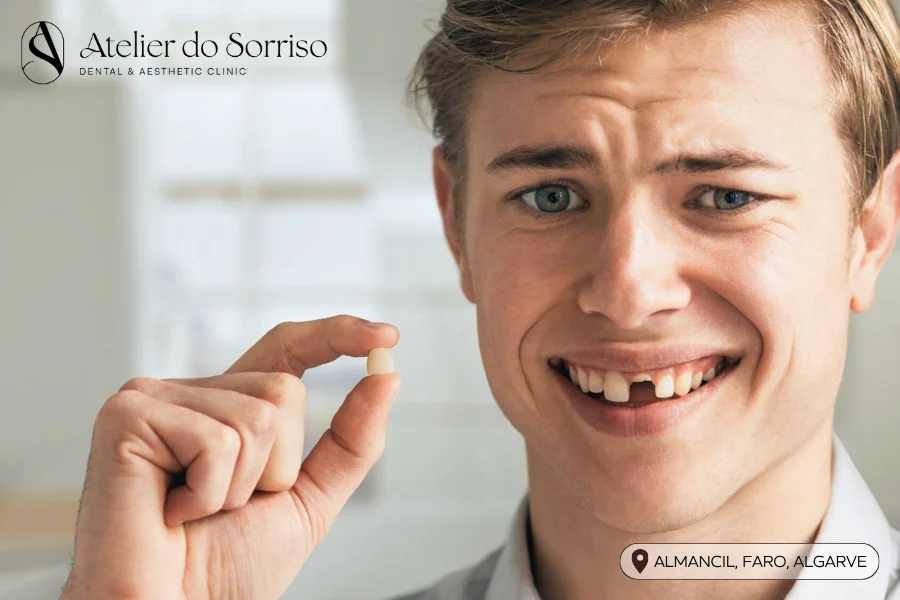
Many patients look for quick fixes when searching for “glue broken tooth”, but it’s important to be clear: trying to repair it at home is not safe.
Risks of Home Remedies
Industrial glue, superglue, or other improvised products might seem like an immediate fix, but they’re highly harmful. Besides being toxic, they can burn the tissues in the mouth, cause infections, and make the dentist’s job even harder.
Why Only a Dentist Should Perform the Repair
Professional bonding is done with specific dental materials, such as high-performance adhesive resins, safe for the body and resistant to daily wear. The dentist also assesses the depth of the fracture and decides whether the original fragment can be reused or whether another type of treatment is needed.
Gluing a broken tooth is only viable when done with professional techniques. Any home attempt can compromise aesthetics, function, and even lead to permanent tooth loss.
Professional Treatments for Repairing Broken Teeth
Depending on the type and extent of the fracture, the dentist may recommend different options for repairing a broken tooth. At Atelier do Sorriso, we assess each case individually to ensure aesthetics, function, and durability.
Bonding the Original Fragment
If the broken piece was properly saved and is in good condition, it’s possible to bond the original fragment back on using specific adhesive materials. This is the most conservative solution, as it preserves the tooth’s natural structure.
Composite Resin Restoration
When no fragment is available or the fracture is small, composite resin is used to rebuild the missing part. This material is shaped and polished to match the color and form of the original tooth.
Dental Veneers
When the fracture affects appearance, especially in front teeth, porcelain or resin dental veneers may be the best option. Besides correcting the broken tooth, they also help create a more uniform smile.
Dental Crowns
For more extensive fractures or ones that affect the tooth’s strength, placing a dental crown is recommended. This treatment restores both appearance and chewing function, protecting the remaining structure.
Dental Implants
If the tooth is severely compromised or cannot be saved, extraction followed by placement of a dental implant may be necessary — a solution that replaces both the root and the lost tooth with maximum stability.
The choice of treatment depends on the size of the fracture, the tooth affected, and each patient’s aesthetic and functional needs.
How to Choose the Best Treatment
Not all dental fractures are the same. The decision on the best way to repair a broken tooth depends on clinical and aesthetic factors the dentist assesses during the consultation.
Extent of the Fracture
Small chips can often be fixed with composite resin or aesthetic contouring, while deeper fractures may require dental crowns or even implants.
Front Tooth vs. Back Tooth
For front teeth, aesthetics is often the priority. In these cases, dental veneers or fragment bonding are common options. For back teeth, where chewing load is greater, strength is essential, making a crown the more suitable choice.
Aesthetic and Functional Factors
Beyond restoring appearance, treatment should also restore chewing function and durability. That’s why, in some cases, the solution combines aesthetics and rehabilitation, ensuring a harmonious and durable result.
At Atelier do Sorriso, each patient receives a personalized plan, designed to preserve as much natural structure as possible and restore the smile’s integrity and beauty.
Frequently Asked Questions About Broken Teeth (FAQ)
How much does it cost to repair a broken tooth?
The cost depends on the type of fracture and the treatment chosen. Simple repairs with composite resin are more affordable, while veneers or crowns involve a bigger investment. In severe cases, a dental implant may be necessary.
Does bonding last forever?
Bonding a fragment can last many years, but it’s not permanent. Factors such as eating habits, bruxism, or trauma can affect its durability. Regular checkups help extend the results.
Can a broken tooth hurt even without decay?
Yes. The fracture can expose the dentin or even the tooth’s pulp, causing sensitivity or spontaneous pain. In these cases, prompt treatment is essential to prevent infection.
What’s the difference between repairing with resin or with a crown?
Composite resin is suited for small to medium fractures, with a focus on aesthetics. A dental crown is used when there’s significant loss of structure, restoring strength and chewing function.
Can I glue a broken tooth at home?
No. Using regular or improvised glue is dangerous and can compromise oral health. Only a dentist can bond a tooth using safe, specific materials.
How long does it take to repair a broken tooth?
In many cases, treatment can be completed in a single appointment, as with composite resin restorations. Solutions such as veneers, crowns, or implants require more steps and additional appointments.
Repair Your Broken Tooth Safely
A broken tooth doesn’t have to be a source of insecurity or discomfort. Today there are several ways to repair it, from bonding the fragment to more advanced solutions such as dental veneers, crowns, or implants. The most important thing is to avoid home remedies and seek professional care as soon as possible.
At Atelier do Sorriso, in Almancil, Faro, we bring together state-of-the-art technology, such as a 3D intraoral scanner, a clinical microscope, and a Fotona laser, to offer modern treatments and long-lasting results. Our team specializes in restoring aesthetics, function, and a natural look to your smile, even in the most complex cases.
If you’ve broken or chipped a tooth affecting your confidence, don’t put off the solution. Book a consultation with us now and find out the best way to restore your smile.
Why Choose Atelier do Sorriso to Repair Broken Teeth in the Algarve
Repairing a broken tooth takes more than just technique — it also takes experience and technology. At Atelier do Sorriso, we offer personalized solutions that combine dental aesthetics and oral rehabilitation, ensuring natural, long-lasting, and safe results.
Expertise in Dental Aesthetics and Rehabilitation
Our team is highly trained in dental veneers, crowns, and implants, as well as tooth-bonding techniques that preserve as much natural structure as possible. Each case is assessed with a focus on smile harmony and chewing function.
Modern Technology at the Patient’s Service
We offer a 3D intraoral scanner for digital diagnostics, a clinical microscope that increases precision in complex cases, and a Fotona laser, which supports disinfection and regeneration procedures. Together, this combination ensures greater comfort and predictability throughout treatment.
Central Location in the Algarve
We’re located in Almancil, Faro, in the heart of the Algarve, with easy access for both residents and international visitors seeking excellent dental treatments during their stay in Portugal.
At Atelier do Sorriso, our priority is to restore patients’ confidence in their smile through modern, safe treatments tailored to their individual needs.
Book Your Consultation Now in the Algarve: Atelier do Sorriso Clinic
Give your smile the care it deserves — with confidence, clarity, and safety.
📍 Address: Rua João de Deus, Lote 1C, Almancil, Algarve (View on Maps)