




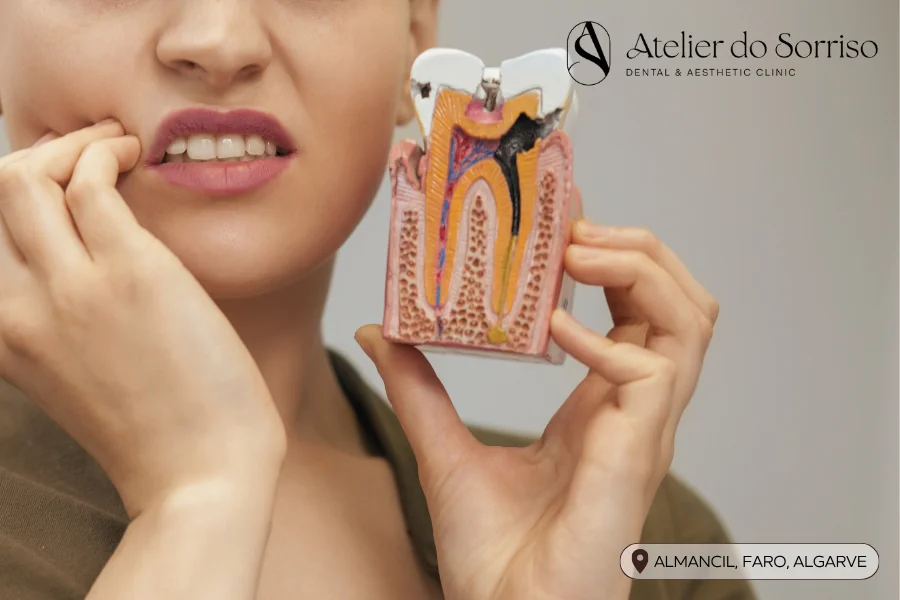
Root canal treatment, also known as endodontic treatment or tooth devitalisation, is one of the most common procedures in endodontics. It preserves teeth damaged by deep decay, trauma or infection by removing the compromised dental pulp, so the tooth can stay in the mouth, healthy and functional.
Many patients arrive at the clinic worried about this treatment, mainly wondering whether a root canal hurts or could lead to complications. The truth is that, with advances in modern dentistry, the procedure has become safe, predictable and, in most cases, painless.
In this article we explain in detail when root canal treatment is needed, how it works step by step, the risks, the alternatives and the aftercare.
If you are looking for root canal treatment in the Algarve, at Atelier do Sorriso in Almancil (Faro) you will find a team specialised in microscope endodontics, equipped with modern technology for maximum comfort and success.
What Is Root Canal Treatment?
Root canal treatment is an endodontic procedure that removes the dental pulp — the inner tissue made of nerves, blood vessels and fibres — when it is inflamed, infected or dead.
The purpose of endodontic treatment
The main goal is to save the natural tooth and avoid extraction. During the procedure, the dentist removes the compromised tissue, disinfects the inside of the tooth and fills the root canals with a biocompatible material. The tooth stays functional, aesthetic and free of infection.
Without this procedure, deep decay, a fracture or dental trauma could lead to the permanent loss of the tooth, requiring more complex and costly treatment such as dental implants.
When Is Root Canal Treatment Needed?
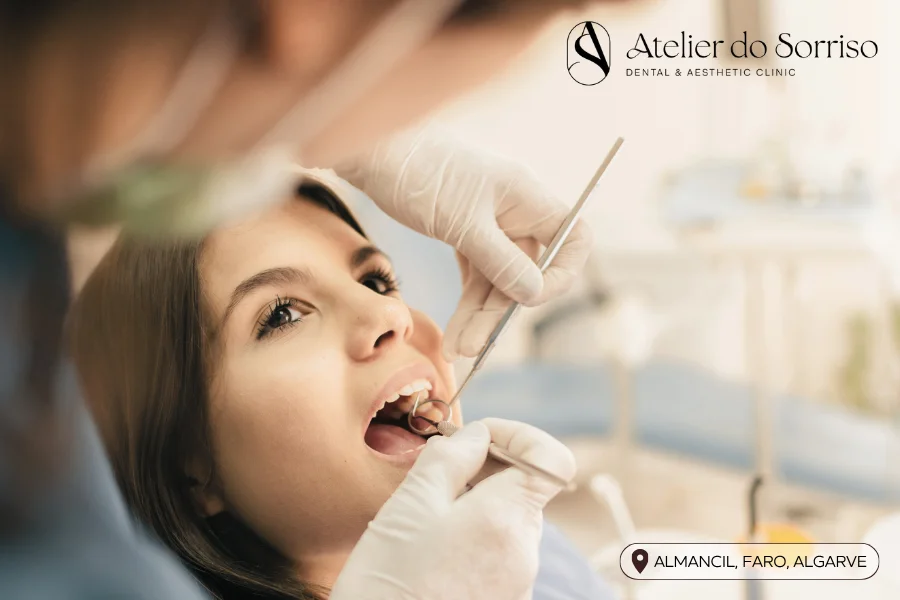
Root canal treatment is indicated when the dental pulp is irreversibly damaged. Identifying the right moment for the procedure avoids severe pain and more serious complications, such as abscesses or tooth loss.
Deep decay and infection
The most common cause is extensive tooth decay that goes through the enamel and dentine to reach the pulp. When this happens, the infection can spread through the root and cause severe inflammation. In these cases, only endodontic treatment can eliminate the problem and save the tooth.
Tooth fractures and trauma
Accidents, falls or impacts can expose the dental pulp and compromise its vitality. Even small fractures may require root canal treatment if they reach the inside of the tooth.
Inflammation of the pulp (pulpitis)
Pulpitis is inflammation of the dental pulp and can be reversible or irreversible. Once it becomes irreversible, the pain is intense and constant, signalling the immediate need for root canal treatment to prevent more serious infection.
In any of these situations, early treatment is always the best option. The sooner the problem is identified, the better the chance of keeping the tooth healthy and functional for many years.
How Root Canal Treatment Is Done: Step by Step
At Atelier do Sorriso Algarve, root canal treatment is carried out with advanced technology for greater precision, comfort and long-lasting results. The procedure follows a structured sequence, supported by modern equipment that makes all the difference.
High-precision diagnosis and examinations
Before starting, we use digital X-rays and, when needed, the 3D intraoral scanner, so we can see the tooth’s anatomy in detail and plan the treatment more safely and predictably.
Comfortable anaesthesia and opening the tooth
Treatment is done under effective local anaesthesia, so the patient feels no pain. A small opening is then made in the crown to reach the compromised pulp.
Clinical microscope for maximum precision
We use a clinical microscope, which magnifies the treatment area and makes it possible to find accessory canals that are often invisible to the naked eye. This technology significantly reduces the risk of endodontic failure.
Cleaning, disinfection and the Fotona laser
The canals are prepared with manual and rotary files, while irrigating solutions remove infected tissue. As a complement, we use the Fotona laser, which provides deep disinfection, reducing the bacterial load and increasing the long-term success rate.
Airflow for biofilm control
Airflow is used to support oral hygiene during treatment, removing biofilm and helping keep the mouth cleaner and healthier.
Filling the canals and final restoration
After cleaning, the canals are filled with gutta-percha and biocompatible sealing materials. Depending on the case, the tooth is finished with a composite resin restoration or a dental crown, restoring strength and appearance.
With this protocol, Atelier do Sorriso makes sure every root canal treatment is safe, painless and supported by the latest in endodontics in the Algarve.
Does Root Canal Treatment Hurt?
One of patients’ biggest concerns is whether a root canal hurts. In the past, the procedure had a reputation for being painful, but the reality in modern dentistry is very different — especially at Atelier do Sorriso, where we use advanced technology to make the experience more comfortable and safe.
During the procedure
Thanks to effective local anaesthesia, the patient feels no pain during treatment. The clinical microscope provides greater precision, avoiding unnecessary manoeuvres and reducing treatment time. The Fotona laser also helps eliminate bacteria quickly and less invasively.
After treatment
It is normal to have slight sensitivity or discomfort for a few days, especially when chewing. These symptoms are usually temporary and can be managed with simple painkillers recommended by the dentist.
Extra comfort with modern technology
At Atelier do Sorriso we also use Airflow for complementary hygiene and digital technology to plan and carry out treatment less invasively. These resources reduce the risk of complications and help make recovery smoother.
Today, root canal treatment should not be something to fear. On the contrary: it is the solution to end severe pain caused by deep decay or infection and restore the tooth’s health.
Risks and Possible Complications of Root Canal Treatment
Root canal treatment is safe and widely performed, but like any medical procedure it can carry risks. At Atelier do Sorriso, the use of a clinical microscope, the Fotona laser, Airflow and advanced digital methods significantly reduces the likelihood of complications.
Persistent infection
If bacteria are not completely removed from the root canals, the infection can come back. Using the Fotona laser for deep disinfection of the canals is one of the most effective ways to minimise this risk.
Fracture of the treated tooth
A tooth that has had root canal treatment can become more fragile. That is why a dental crown is often recommended to restore strength and protect the tooth structure.
Failed canal sealing
If the filling material does not properly fill the inside of the tooth, there is a risk of leakage and new infection. At Atelier do Sorriso, the combination of clinical microscopy and modern filling techniques ensures a more precise and lasting seal.
Other less common effects
Prolonged discomfort, root resorption or the need for retreatment can occur. Although rare, these should be monitored at check-up appointments.
With our team’s experience and technology, root canal treatment in the Algarve at Atelier do Sorriso has high success rates, giving patients safety and peace of mind.
Alternatives to Root Canal Treatment
Although root canal treatment is the best way to save a compromised tooth, other approaches can sometimes be considered. The decision depends on the extent of the damage, the health of the root and the long-term prognosis.
Conservative procedures
When the pulp inflammation is still reversible, techniques that avoid root canal treatment can be used, such as:
-
Direct or indirect pulp capping – applying biocompatible materials over the dentine close to the pulp to stimulate its repair.
-
Partial pulpotomy – removing only the inflamed part of the pulp, keeping the root vital.
These techniques are more common in young teeth or when the problem is diagnosed early.
Tooth extraction and implant
If the tooth is severely damaged or the infection is extensive and irreversible, tooth extraction may be necessary. In these cases, the preferred solution is a dental implant, which restores chewing function and appearance.
Personalised assessment
At Atelier do Sorriso, every case is assessed individually. Our priority is always to keep the natural tooth whenever possible, using the best technology to ensure treatment success. Extraction is only considered when the tooth cannot be saved.
Aftercare Following Root Canal Treatment
After root canal treatment, aftercare is essential for proper healing and to extend the life of the treated tooth.
Thorough oral hygiene
A daily routine of correct brushing, flossing and, when recommended, antibacterial mouthwash is essential. A root-treated tooth is still susceptible to external decay and gum problems, even without its pulp.
Diet and protecting the tooth
For the first few days, avoid chewing very hard or sticky foods on the side of the treated tooth. This reduces the risk of fracture before the final restoration or dental crown is placed.
Check-up appointments
Regular follow-up makes it possible to assess the success of the treatment. At Atelier do Sorriso we use digital X-rays and the intraoral scanner when needed to monitor healing and prevent complications.
Maintaining restorations and crowns
For more fragile teeth, a crown is recommended. Keeping these restorations in good condition is crucial to avoid leakage and extend the life of the tooth.
Following these recommendations helps ensure that root canal treatment brings not only pain relief but also long-term stability and oral health.
Frequently Asked Questions about Root Canal Treatment (FAQ)
How long does root canal treatment take?
It depends on the number of canals and the complexity of the case. Single-rooted teeth can be treated in one session, while molars usually need two or three appointments.
Does root canal treatment hurt?
There is no pain during the procedure, as it is done under local anaesthesia. Afterwards there may be slight sensitivity for a few days, easily managed with simple medication.
How much does root canal treatment cost?
The cost depends on the tooth treated, its complexity and whether a restoration or crown is needed. At Atelier do Sorriso, each case is assessed individually and the patient receives a transparent treatment plan.
Can a root-treated tooth hurt again?
Yes, if there is persistent infection, failed sealing or leakage through faulty restorations. In these cases, retreatment may be needed.
Does the treated tooth darken?
Some root-treated teeth can change colour over time. This can be corrected with internal whitening, dental veneers or crowns.
Is root canal treatment permanent?
In most cases, yes. When well performed and followed up, the result can last for decades. It does, however, require regular maintenance and good oral hygiene.
Take Care of Your Oral Health Today
Root canal treatment is often the solution to save teeth that would otherwise be lost. With the modern techniques and technology available at Atelier do Sorriso, the procedure has become safe, effective and virtually painless.
Ignoring symptoms such as persistent pain, sensitivity to hot and cold or infection can make the problem worse and lead to more serious complications. Seeking help at the right time is the best way to protect your oral health and avoid more complex treatment in the future.
If you are looking for root canal treatment in the Algarve, our clinic in Almancil, Faro has specialists in endodontics, clinical microscopy, the Fotona laser and digital methods that ensure precision and comfort at every stage.
Why Choose Atelier do Sorriso for Root Canal Treatment in the Algarve
Where you have root canal treatment makes all the difference to the final result. At Atelier do Sorriso we combine advanced technology, clinical experience and personalised care for maximum safety and comfort.
Modern technology in endodontics
We have a clinical microscope that helps locate accessory canals and increases treatment precision. We also use the Fotona laser, which provides deep disinfection of the root canals, significantly reducing the risk of reinfection. Airflow is used as a complement to remove biofilm and improve oral hygiene during the process.
A specialised team
Our dentists have advanced training in endodontics and are prepared for both simple cases and complex situations, including retreatments. This experience means greater predictability and a higher success rate.
Central location in the Algarve
We are in Almancil, Faro, easy to reach for residents and visitors looking for quality dental treatment during their stay in the Algarve.
At Atelier do Sorriso every patient receives a personalised treatment plan, with transparency and close follow-up, so root canal treatment is carried out with comfort and confidence.
Book Your Root Canal Treatment in the Algarve: Atelier do Sorriso Clinic
Give your smile the care it deserves — with confidence, clarity and safety.
📍 Address: Rua João de Deus, Lote 1C, Almancil, Algarve (See on Maps)