




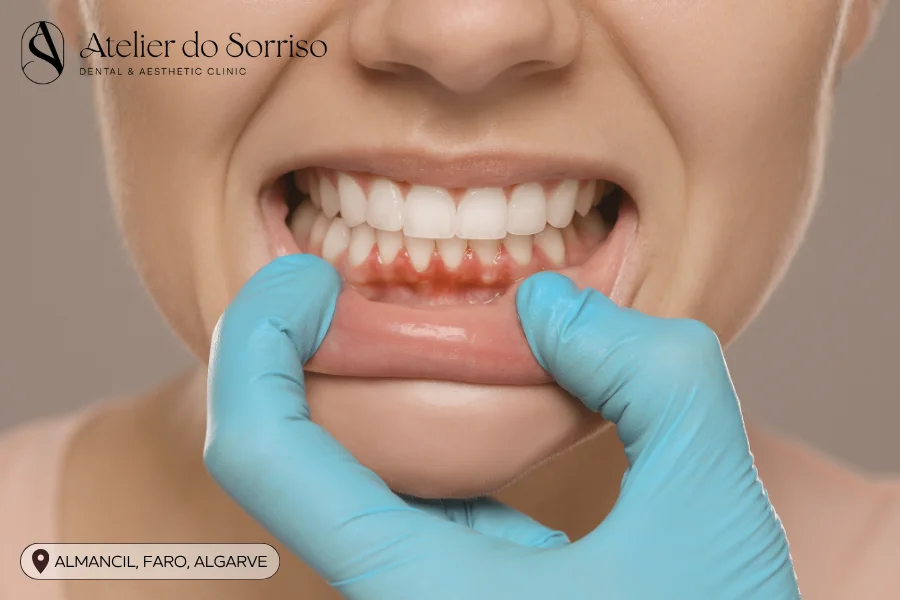
Periodontal diseases are one of the main causes of tooth loss in adults, affecting oral health and quality of life. Even though they are very common, many people do not recognise the early signs or understand why it is important to treat them in time.
Periodontal disease ranges from a simple inflammation of the gums, known as gingivitis, to more serious forms such as periodontitis and peri-implantitis, which affect the bone and the supporting tissues of the teeth.
At Atelier do Sorriso, in Almancil, Algarve, we offer advanced, personalised treatment for every stage of periodontal disease. In this article we explain what these diseases are, how to recognise them and the treatment options available to keep your gums and teeth healthy.
What Are Periodontal Diseases?
Periodontal diseases are conditions that affect the gums and the tissues that support the teeth. They are mainly caused by plaque building up on the tooth surfaces and along the gum line.
Plaque is a sticky film that forms constantly; if it is not removed with proper oral hygiene, it can irritate the gums and lead to inflammation.
There are different types of periodontal disease, each with its own characteristics and severity. The most common are gingivitis, the early and reversible stage, and periodontitis, which is more advanced and can cause permanent damage to the supporting tissues and bone.
Peri-implantitis is another form of periodontal disease, but it specifically affects dental implants and can compromise their stability. Understanding the differences between these conditions is crucial to preventing complications and keeping your mouth healthy in the long term.
Read also: Gingivitis and Periodontitis: What Is the Difference? How to Treat Them?
8 Main Causes of Periodontal Disease
Gum and periodontal disease can be triggered by a variety of factors, some easier to control than others. Knowing these causes can help prevent gingivitis and periodontitis. Here are the main causes in detail:
1. Poor Oral Hygiene
Poor oral hygiene is the main cause of periodontal disease. Plaque, a sticky film full of bacteria, forms on the tooth surfaces and along the gum line when brushing and flossing are not done properly. If it is not removed, it hardens into tartar, which only a dentist can remove. Tartar irritates the gums, causing inflammation and creating the ideal environment for gingivitis and periodontitis.
2. Smoking
Smoking harms gum health by reducing blood flow and weakening the immune response. It makes it harder for gum tissue to heal and for the body to fight infection.
Smoking can also mask common symptoms of gum disease, such as bleeding, which makes early diagnosis and treatment harder. Smokers are therefore at greater risk of both gingivitis and periodontitis.
3. Hormonal Changes
Hormonal changes, such as those during pregnancy, menopause, the menstrual cycle or when taking contraceptives, can make the gums more sensitive and prone to inflammation. Changing hormone levels affect how the body responds to plaque, making gingivitis more likely even with small amounts of plaque.
During these phases, it is essential to pay extra attention to oral hygiene to avoid gum problems.
4. Systemic Diseases
Conditions such as diabetes directly affect gum health. In diabetes, poor blood sugar control weakens the immune system, making it harder for the body to fight infections, including those of the gums.
Other diseases, such as Sjögren’s syndrome, which causes a dry mouth, and osteoporosis, which affects bone density, also increase the risk of gum disease. These conditions make early diagnosis and treatment even more important.
5. Medication
Some medicines have side effects that contribute to gum disease. Anticonvulsants, blood pressure medicines and immunosuppressants can cause gum overgrowth, making it easier for plaque to build up.
Other medicines, such as antidepressants and antihistamines, can reduce saliva production and cause a dry mouth. Saliva plays a key role in washing away bacteria and food debris, protecting the gums from infection.
6. Diet and Nutrition
An unbalanced diet, especially one low in essential nutrients such as vitamin C and calcium, can compromise gum health. Vitamin C is essential for tissue repair, and a deficiency can weaken the gums and make them more prone to inflammation.
A diet rich in sugars and refined carbohydrates also encourages plaque, increasing the risk of gum disease.
7. Stress
Stress weakens the immune system and the body’s ability to fight infection. It can also lead to harmful behaviours, such as grinding the teeth or neglecting oral hygiene, which contribute to gum disease.
Stress can also trigger an inflammatory response in the body, further worsening gum health.
8. Genetics
Genetic predisposition is another factor. Some people are genetically more prone to gum disease, even with good oral hygiene.
If there is a family history of gum problems, it is important to pay closer attention to oral care and see the dentist regularly for monitoring and prevention.
Common Symptoms of Periodontal Disease

The symptoms of gum disease vary depending on the stage and severity of the condition. However, there are common signs that point to gum problems, whether at the early gingivitis stage or in more advanced stages such as periodontitis:
- Bleeding gums: It happens especially when brushing or flossing and indicates inflammation. Many people underestimate this sign, but it is one of the first indicators of gum problems.
- Redness and swelling: The gums become red and swollen in response to plaque. This is a sign of inflammation and that action is needed to stop the disease progressing.
- Gum recession: As periodontitis progresses, the gums start to pull away from the teeth, exposing the roots. This can be a sign that the supporting tissues are being destroyed and that treatment is needed.
- Periodontal pockets: Spaces form between the gums and the teeth where plaque and tartar build up. These pockets indicate a more advanced stage of gum disease and are hard to clean without professional help.
- Loose teeth: In advanced stages, teeth may become loose, a sign that the supporting bone has been affected. This is worrying and needs immediate treatment to avoid tooth loss.
- Persistent bad breath: An active gum infection can cause bad breath that does not go away with normal oral hygiene, a sign that there are many bacteria present.
- Gum discomfort or pain: Pain or discomfort in the gums indicates inflammation and possibly an active infection.
The Most Common Types of Gum Disease
Periodontal diseases include different conditions that vary in severity and extent. Knowing the most common types helps you understand how they progress and how they should be treated.
Gingivitis
Gingivitis is the earliest and most common form of gum disease. It is an inflammation of the gums caused by plaque along the gum line. Symptoms include redness, swelling and bleeding when brushing or flossing. Although uncomfortable, gingivitis is reversible if treated in time, with good oral hygiene and professional cleaning to remove plaque and tartar. If ignored, it can progress to a more serious condition called periodontitis.
Periodontitis
Periodontitis is the progression of untreated gingivitis and affects the deeper tissues and the bone supporting the teeth. At this stage, the inflammation creates periodontal pockets, where the gums pull away from the teeth and let bacteria in. This can destroy the supporting bone and ligaments, leading to loose teeth and, in extreme cases, tooth loss. Periodontitis needs more complex treatment, such as scaling and root planing, laser therapy and, in some cases, periodontal surgery.
Peri-Implantitis
Peri-implantitis affects the tissues around dental implants. Like periodontitis, it involves inflammation and bone loss, but specifically around an implant. Plaque and tartar around the implant can inflame the surrounding tissues and, if untreated, compromise the implant’s stability and lead to its failure. Treatment can include decontaminating the area with laser therapy and bone regeneration procedures.
Each of these conditions needs a specific approach, depending on how far it has progressed and the patient’s overall oral health. At Atelier do Sorriso we use a range of modern techniques to treat each type of gum disease, with a focus on prevention and restoring gum health.
Modern Treatments for Periodontal Disease
With advances in dental technology, treatments for gum and periodontal disease have become more effective and less invasive.
Besides traditional methods such as scaling and root planing, we now have modern, less invasive and virtually painless options, such as Waterlase and AirFlow, which offer extra benefits in comfort and results.
Waterlase iPlus Treatment with an Erbium-Chromium Laser
Waterlase therapy is a significant step forward in treating gum disease. It uses hydrokinetic technology, combining the energy of an Erbium-Chromium YSGG laser with a water spray to disinfect and precisely remove inflamed tissue.
Unlike traditional scaling, Waterlase is minimally invasive and promotes faster healing.
Advantages of Waterlase in Treating Gum Disease:
The technique reaches hard-to-access areas without damaging the surrounding healthy tissue, reducing the risk of complications and improving comfort. Waterlase also stimulates bone and tissue regeneration, making it an effective option for periodontitis and peri-implantitis.
AirFlow GBT Treatment
AirFlow is another modern approach that complements laser therapy. It uses a mix of air, water and fine particles to deep-clean the tooth surfaces and remove plaque and tartar. AirFlow is a gentle, painless alternative and is especially effective at removing biofilm below the gum line.
Advantages of AirFlow in Treating Gum Disease:
Unlike manual scaling, AirFlow is faster and gives a thorough clean without discomfort. It is particularly useful as maintenance after more invasive procedures, helping to keep the results and prevent gum disease from coming back.
Traditional Methods for Treating Gum Disease
- Scaling and root planing: The traditional treatment to remove tartar and plaque from periodontal pockets and smooth the root surfaces. Although effective, it can be uncomfortable and needs several sessions.
- Periodontal surgery: In advanced periodontitis, surgery may be needed to reduce the pockets and regenerate lost bone. It is a more invasive procedure with a longer recovery time.
Traditional methods, though effective, can be uncomfortable and invasive.
Modern techniques such as Waterlase and AirFlow offer a more comfortable experience and more efficient results. They are minimally invasive, speed up recovery and, in many cases, can avoid the need for surgery. This makes them the preferred option for many patients, offering more advanced and less painful treatment.
🦷 Related treatments at Atelier do Sorriso: Periodontics
Preventing Gum Disease
Prevention is the best strategy for healthy gums. Good oral hygiene and regular dental visits are key to preventing gingivitis and stopping it from progressing to periodontitis.
- Proper oral hygiene: Brushing at least twice a day with fluoride toothpaste and flossing daily are essential to remove plaque and prevent tartar. Use the correct technique to reach every tooth surface and the gum line.
- Regular dental check-ups: Professional cleaning removes the tartar that brushing and flossing cannot. The dentist can also spot early signs of gum disease and start preventive treatment.
- Diet and lifestyle: A balanced diet rich in vitamins and minerals is important for healthy gums. Vitamin C, for example, is essential for repairing gum tissue. Cutting down on sugary foods reduces plaque, and smoking should be avoided, as it is a major risk factor for gum disease.
- Managing systemic diseases: Controlling conditions such as diabetes is important, as systemic diseases can increase the risk of gum inflammation.
Prevention is always simpler and less costly than treating an established disease. A daily care routine and regular check-ups are key to healthy gums.
The Importance of Early Diagnosis
Early diagnosis of periodontal disease is essential to stop gingivitis from progressing to more serious conditions such as periodontitis and peri-implantitis. Identifying and treating these diseases early can prevent the destruction of the supporting tissues and tooth loss.
When caught early, gum diseases are easier to treat and can often be reversed. Gingivitis, the early and reversible stage, can be eliminated with good oral hygiene and professional cleaning. When ignored, mild symptoms can progress to periodontitis, which destroys the supporting bone and ligaments and needs more complex, invasive treatment.
Early diagnosis also allows the use of less invasive modern treatments, such as Waterlase therapy and AirFlow, avoiding surgery. These methods treat the disease effectively, promoting tissue regeneration and avoiding the need for extractions.
Early diagnosis also benefits your general health. Studies show that oral health is linked to several systemic conditions, such as heart disease and diabetes. Treating gum disease early helps reduce the risks associated with these conditions.
At Atelier do Sorriso we stress the importance of regular check-ups to detect any sign of gum disease early. Our aim is to provide preventive, personalised care using the best practices and technology available.
Book an Appointment to Treat Gum Disease in the Algarve
If left untreated, gum disease can progress and lead to tooth loss and poorer oral health. If you have noticed signs such as bleeding or receding gums, do not wait to seek help. Early treatment can stop the disease from progressing and avoid more serious complications.