




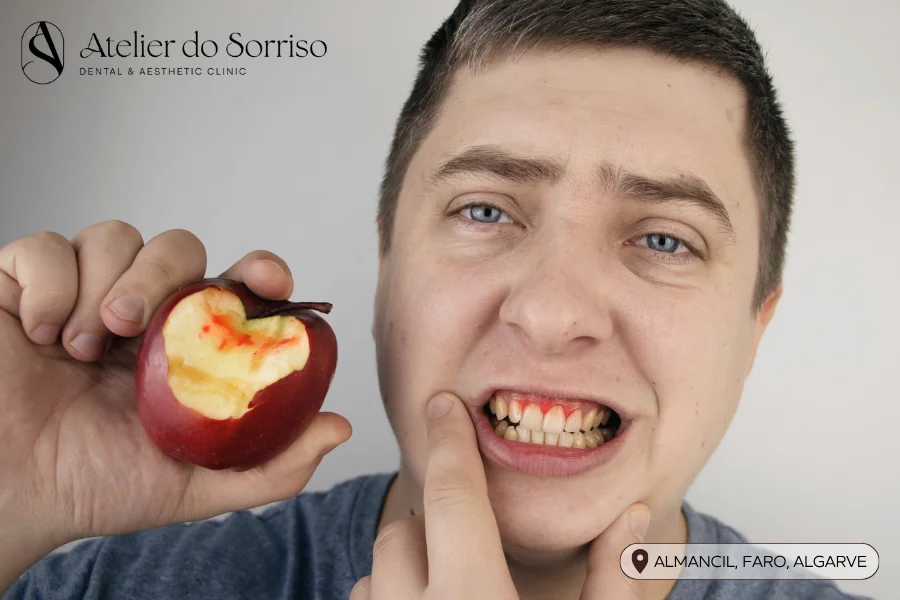
Healthy gums are essential for a healthy smile and for preventing more serious problems. People often confuse gingivitis with periodontitis, thinking they are the same thing.
Although both are periodontal diseases, there are important differences between them. Understanding these differences is crucial to spotting symptoms early and getting the right treatment.
At Atelier do Sorriso, in Almancil, Algarve, we offer specialised treatment for these conditions, focused on preserving our patients’ oral health. In this article we explain what sets gingivitis apart from periodontitis, their symptoms and the treatment options for each.
What Is Gingivitis?
Gingivitis is the most common and earliest form of gum disease. It is an inflammation of the gums caused mainly by plaque building up along the gum line. When plaque is not removed properly, it hardens into tartar, irritating the gums and causing inflammation.
The main symptoms of gingivitis are redness, swelling and bleeding of the gums, especially when brushing or flossing.
Despite these signs, gingivitis usually does not cause significant pain, which can lead people to neglect it. However, if treated early it is reversible and does not cause permanent damage to the tissues and bone that support the teeth.
Factors such as poor oral hygiene, smoking, hormonal changes and systemic diseases can increase the risk of gingivitis. Prevention includes daily oral hygiene and regular visits to the dentist for professional cleaning.
What Is Periodontitis?
Periodontitis is the progression of gingivitis when it is not treated properly. Unlike gingivitis, periodontitis causes deeper damage to the tissues that support the teeth.
At this stage the infection reaches the deeper layers of the gum and can lead to loss of the bone and ligaments that hold the teeth firmly in place.
One of the signs of periodontitis is the appearance of periodontal pockets around the teeth, where the gums start to pull away and create spaces in which plaque and tartar accumulate. Other symptoms include loose teeth, persistent bad breath and gum recession, where the gums pull back from the teeth and expose the roots.
If left untreated, periodontitis can lead to tooth loss, as the supporting bone is destroyed. It is also linked to other systemic diseases, such as diabetes and cardiovascular problems, which makes treatment even more important for overall health.
See also: Peri-implantitis
Similar to periodontitis, peri-implantitis is an inflammation around dental implants that can cause loss of the bone supporting them. Symptoms include inflamed gums, bleeding and, in advanced cases, a loose implant.
Main Differences Between Gingivitis and Periodontitis

Although they are related, gingivitis and periodontitis differ in several ways, including severity and impact on oral health.
Level of Inflammation and Impact
- Gingivitis: A superficial inflammation limited to the gums. It does not affect the bone or the supporting tissues of the teeth. When identified and treated early, it is reversible, with no permanent damage.
- Periodontitis: The inflammation spreads to the deeper tissues and the bone that supports the teeth. It causes bone loss and can lead to loose teeth or even tooth loss. This damage is often irreversible and requires more complex treatment.
Reversibility and Treatment
- Gingivitis: As an early condition, gingivitis can be reversed with good oral hygiene and regular professional cleaning. There is no permanent damage to the bone or periodontal tissues.
- Periodontitis: Needs more intensive treatment. Although the disease can be brought under control, full regeneration of the lost tissue and bone is not possible in most cases. It may require procedures such as scaling, root planing or periodontal surgery.
Signs and Symptoms of Gingivitis and Periodontitis: How to Tell Them Apart?
Recognising the symptoms of each condition helps with early diagnosis and treatment. Although they share some signs, gingivitis and periodontitis have clear differences.
Common Symptoms of Gingivitis
- Redness and swelling: The gums become red and swollen because of the inflammation.
- Bleeding: It happens easily when brushing or flossing, even with light pressure.
- Mild discomfort: There may be some sensitivity or discomfort in the gums, but no significant pain.
Symptoms That Point to Periodontitis
- Gum recession: The gums start to pull back, exposing more of the tooth root.
- Periodontal pockets: Spaces form between the gums and the teeth, where plaque and tartar build up.
- Loose teeth: In advanced cases, teeth may become loose because of the loss of bone support.
- Persistent bad breath: Periodontal pockets and infection can lead to chronic bad breath.
Treating gingivitis in time can stop it from progressing to periodontitis, which is a more serious condition and more complex to treat.
Read also: Gum Pain: Causes, How to Relieve It and Treatments
Treating Gingivitis and Periodontitis
Treatment for Gingivitis
- Professional cleaning: The first line of treatment is removing the plaque and tartar on the tooth surfaces. A professional clean by a dentist eliminates the bacteria that cause the inflammation.
- Oral hygiene at home: After the cleaning, good oral hygiene is essential. Brushing at least twice a day and flossing help prevent plaque from building up.
- Antiseptics: Antiseptic mouthwashes may be recommended to control bacteria and reduce inflammation.
Treatment for Periodontitis
- Scaling and root planing: This removes plaque and tartar from the periodontal pockets and smooths the tooth roots to help the gums reattach.
- Laser therapy: In some cases, the laser can be used to decontaminate the pockets and promote tissue regeneration.
- Periodontal surgery: In the most advanced cases, surgery may be needed to reduce the periodontal pockets and regenerate lost bone.
- Antibiotics: They may be given locally or systemically to fight the infection.
🦷 Related treatments at Atelier do Sorriso: Periodontics
How to Prevent Them?
- Regular oral hygiene: Correct brushing and flossing are essential to prevent plaque build-up.
- Regular dental visits: Periodic check-ups allow early detection of gum problems and professional cleaning.
- A healthy lifestyle: Not smoking, eating a balanced diet and controlling systemic conditions such as diabetes all contribute to healthy gums.
Prevention is always the best treatment. Keeping up daily care and seeking professional help at the first sign of a problem can avoid future complications.
Why Choose Atelier do Sorriso in the Algarve?
At Atelier do Sorriso we offer specialised care for gum disease, including gingivitis and periodontitis. Our team is experienced in identifying and treating these conditions, using the most advanced techniques available for effective, long-lasting results.
A Personalised Approach
Every patient has a full assessment to identify the stage of gum disease and its underlying causes. Based on this diagnosis, we create a personalised treatment plan tailored to each person’s needs, from professional cleaning for gingivitis to more complex procedures for periodontitis.
Advanced Technology
We use modern equipment and the latest techniques, such as laser therapy, for effective and comfortable treatment. Our minimally invasive approach shortens recovery time and improves the patient’s experience throughout treatment.
A Convenient Location
Located in Almancil, in the Algarve, our clinic offers a welcoming, professional environment. We are committed to quality care focused on the prevention and effective treatment of gum disease.
Trusting Atelier do Sorriso with your oral health means choosing a clinic dedicated to excellence and to the well-being of its patients.
Book an Appointment and Protect Your Gum Health
If you have noticed signs of gingivitis or periodontitis, such as bleeding or receding gums, do not wait to seek help. Early treatment can stop the disease from progressing and avoid more serious complications.