





Gum pain is more than a simple discomfort; it is a key sign that your oral health may be at risk. Every time we chew, smile or speak, our gums play a vital role, protecting and supporting our teeth. When this protective barrier starts to show signs of discomfort or pain, it is essential to pay attention and act.
Although it is a common complaint, neglecting gum pain can have serious consequences for oral and general health. With so many daily demands, it can be easy to ignore the sensation. However, identifying and treating its causes can be the key to a healthy smile for many years.
In this guide we look at the causes, myths and solutions related to gum pain. With this knowledge, you will be better prepared to look after your oral health and smile with confidence.
Main Causes of Gum and Tooth Pain
Gingivitis

Gingivitis is often the first cause that comes to mind when we think of gum pain. It is an inflammation of the gums usually caused by bacteria:
- Causes and prevention: One of the main causes of gingivitis is inadequate oral hygiene. Without proper cleaning, food debris can build up between the gum and the tooth, encouraging bacteria to multiply. Prevention is relatively simple: brush effectively, floss daily and see the dentist regularly.
- Plaque and tartar: Plaque is a sticky, colourless layer of bacteria that forms constantly on our teeth. If it is not removed properly, it can harden into tartar. Both are key factors in gingivitis.
- Effects of untreated gingivitis: If ignored, gingivitis can progress to a more serious condition, periodontitis, which can lead to receding gums, bone loss and eventually tooth loss.
Infections
Besides gingivitis, other infections can also cause gum pain:
- How they occur and their consequences: Infections usually arise from bacteria staying in the mouth for a long time. Untreated, they can cause decay, abscesses and other more serious problems, as well as pain in the gums and teeth.
- The link between oral infections and other organs: An untreated infection in the mouth can enter the bloodstream and affect other vital organs. Bacterial endocarditis, for example, is a condition in which bacteria lodge in the heart and cause serious complications.
Mouth Ulcers
Mouth ulcers (canker sores) are small sores inside the mouth that can cause considerable gum pain and discomfort. They are not contagious, but they can be very irritating.
Unlike cold sores, which appear on the outside of the lips and are caused by a virus, mouth ulcers appear inside the mouth and their exact cause is not fully known.
- Symptoms and treatment: Ulcers usually look like round or oval white or yellowish areas surrounded by a bright red ring. They can be painful and, in some cases, cause fever and swollen lymph nodes. Although they usually go away on their own in one or two weeks, mouthwashes and topical ointments can reduce the pain and speed up healing.
- Prevention: Avoiding foods that irritate the mouth, keeping good oral hygiene and managing stress can help prevent ulcers.
Dental Abscess and Gum Abscess
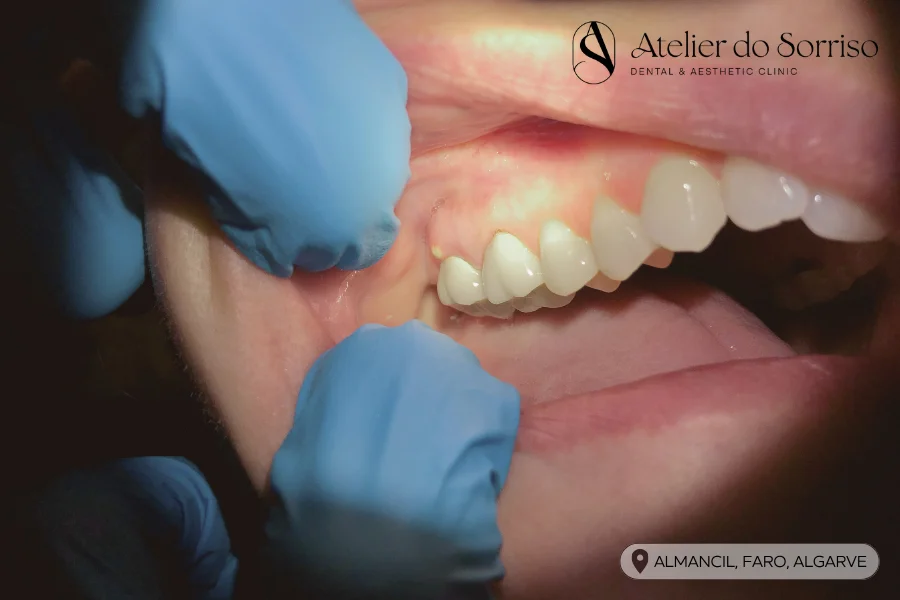
A dental abscess is a pocket of pus caused by a bacterial infection. It can form in the gum next to a tooth or at the root of the tooth and is one of the most common causes of gum pain. Similarly, a gum abscess forms specifically in the gum because of an infection.
- Causes and treatment: The main cause of an abscess is a bacterial infection, which can start from deep decay, trauma to the tooth or gum disease. Treatment usually involves draining the pus and eliminating the infection, which may require antibiotics and, in some cases, root canal treatment.
- Read our full article: Gum and Dental Abscess: Symptoms and Treatments
Braces and Dentures
Wearing braces is common, but it can cause gum pain. Especially at the beginning, these devices can cause some discomfort or rub the gums.
Poorly fitting dentures or braces that constantly rub the gum can cause ulcers and inflammation. A proper fit and frequent cleaning are essential to prevent bacteria from building up.
Oral hygiene and regular dental visits are crucial to prevent problems related to braces and dentures.
Oral Thrush (Oral Candidiasis)
Oral thrush is a fungal infection that can cause pain and discomfort in the mouth:
- Causes and symptoms: Thrush occurs when the Candida fungus multiplies in the mouth. Long-term antibiotic use, diabetes or a weakened immune system can encourage it. Symptoms include whitish patches in the mouth and on the gums, pain and difficulty swallowing.
- Treatment: Thrush is usually treated with antifungal medication. It is important to treat it quickly, as in people with a weakened immune system the infection can spread to other parts of the body.
Hormonal Changes
Hormones play a crucial role in the body, especially for women, and their fluctuations can affect oral health:
- Effects on the gums: During puberty, menstruation, pregnancy and menopause, women may notice that their gums become more sensitive or bleed more easily. This is due to hormonal fluctuations that affect how the body responds to the bacteria that cause gingivitis.
- Prevention: During significant hormonal changes, proper oral hygiene becomes even more important. As well as regular brushing and flossing, frequent dental check-ups are essential during these periods.
Wisdom Teeth Coming Through
Many of us go through the discomfort of a wisdom tooth coming through:
- Signs that a wisdom tooth is erupting: Pain or swelling at the back of the gum can be a sign. Wisdom teeth, the third molars, usually come through between the ages of 16 and 21.
- Possible complications: Wisdom teeth do not always have enough room to come through properly, which can cause impaction or inflammation. When a wisdom tooth only partly erupts, it can cause pericoronitis, a painful condition that may require extraction.
- When to seek help: If gum pain from a wisdom tooth becomes constant or intense, or comes with swelling, it is time to see a dentist. Extraction may be the best way to avoid future complications.
Each cause of gum pain has its own challenges and solutions. Whatever the cause, seeking advice from a dentist is always the best course.
Read also: All About Wisdom Tooth Extraction
Physical Trauma
Unexpected events or accidents can cause direct trauma to the gum, resulting in gum pain:
- Common types of trauma: Besides injuries from brushing too hard, falls, sports impacts or even accidentally biting the gum while eating can cause injuries.
- Symptoms and treatment: Traumatic gum injuries can appear as swelling, bleeding or cuts. Depending on how serious they are, immediate treatment may be needed. After significant trauma, it is essential to see a dentist to make sure there is no underlying damage and to get the right treatment.
- Prevention: Wearing a mouth guard during contact sports or high-risk activities can reduce the chance of direct trauma to the mouth and gums.
How to Relieve Gum Pain?
Dealing with gum pain, especially intense gum pain, can be extremely uncomfortable and upsetting. Fortunately, there are several things you can do to relieve the discomfort, whatever its intensity:
- Proper oral hygiene: Keep a thorough brushing and flossing routine to stop bacteria and debris from building up. A soft-bristled toothbrush is less irritating for sensitive gums.
- Mouthwashes: There are mouthwashes specifically for sensitive or inflamed gums. They can relieve pain and reduce inflammation.
- Applying cold: A cold compress on the affected area can relieve pain and reduce swelling, an effective measure for moments of intense gum pain.
- Avoid irritating foods: Very hot, cold, acidic or spicy foods and drinks can make the pain worse. Try to avoid them if your gums are sensitive or painful.
- Over-the-counter medicines: Painkillers such as ibuprofen or paracetamol can relieve the pain temporarily. However, it is always best to ask a professional before taking any medication.
- Topical gel: Some gels can be applied directly to the gum to relieve pain. They offer temporary relief and are especially useful for intense gum pain.
Modern Treatments for Gum Pain
Dentistry has evolved quickly, bringing innovative treatments that offer faster, more effective and less painful solutions to problems such as gum pain.
- Laser dentistry: One of the most notable innovations is the use of lasers in dentistry. Laser treatments can be used to treat gingivitis and periodontitis, remove excess gum tissue and even treat ulcers. Laser procedures are less invasive, reduce bleeding, speed up healing and are often less painful than traditional methods.
- Bioactive therapies: Materials and treatments that promote gum tissue regeneration are being developed. They have the potential not only to relieve pain but also to heal damage to the gums and underlying bone.
- Personalised products: As research evolves, there is a growing range of toothpastes, mouthwashes and other products designed specifically for gum problems and adapted to each patient’s needs.
- Advanced diagnosis: New technologies, such as 3D imaging and digital diagnosis, allow dentists to detect and treat gum problems with unprecedented precision.
FAQ: Frequently Asked Questions about Gum Pain
What causes gum pain?
Gum pain can have many causes, including gingivitis, infections, trauma, mouth ulcers, hormonal changes and wisdom teeth coming through.
Is gingivitis the only gum disease?
No, gingivitis is only the first stage. If untreated, it can progress to periodontitis, a more serious form that can lead to tooth loss.
Can gum pain indicate problems in other organs?
Yes. Untreated infections in the mouth can affect other organs, such as the heart, through the bloodstream.
How can I relieve gum pain at home?
Good oral hygiene, specific mouthwashes, avoiding irritating foods and applying cold compresses are some ways to get relief.
Can braces cause gum pain?
Yes, especially at the start of treatment. The gum may feel irritated or sore, but this usually eases over time.
Does a wisdom tooth coming through always hurt?
Not always, but discomfort or pain is common during this process. If the pain is intense or persistent, see a dentist.
What are mouth ulcers and can they cause gum pain?
Mouth ulcers are small sores that appear in the mouth and can be quite painful. They are not caused by bacteria or viruses, but by factors such as stress, injuries or certain foods.
Can smoking affect gum health?
Yes, smoking can harm gum health, increasing the risk of gum disease and reducing the gum tissue’s ability to heal.
Are there modern treatments for gum pain?
Yes, modern dentistry offers several options, such as laser dentistry, bioactive therapies and personalised products.
Is it normal to have gum pain during pregnancy?
Many women experience “pregnancy gingivitis” because of hormonal changes, which can cause swelling, bleeding and sensitive gums. It is essential to keep good oral hygiene during pregnancy and see a dentist regularly.